
Built Without Limits.
Your workspace should evolve with your business needs. Modular wall solutions offer a smart, stylish, and flexible way to divide space, enhance privacy, and improve acoustics, all without the limitations of traditional construction.
What are Modular/Moveable Walls?
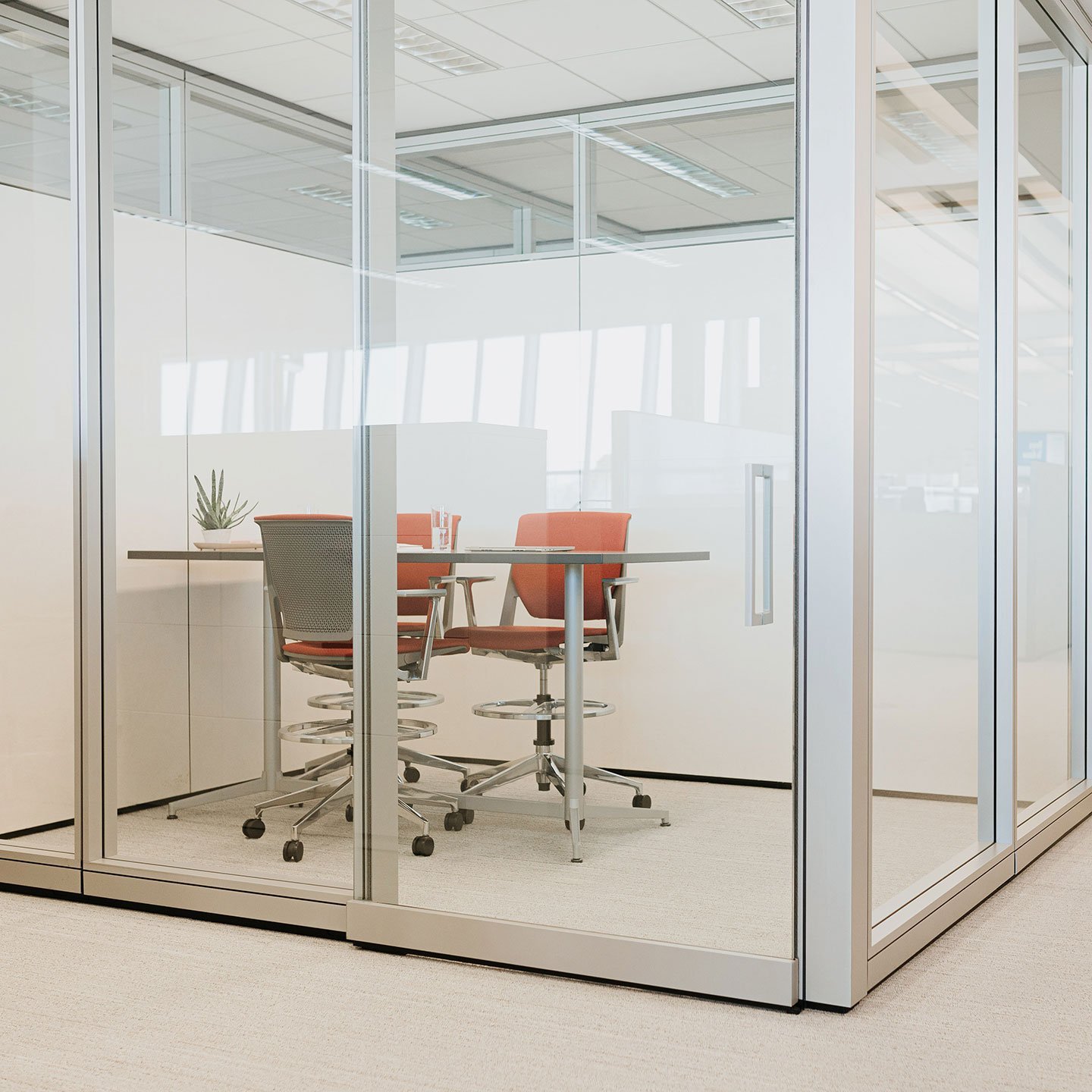
Modular office walls are demountable wall systems that allow you to create enclosed spaces without permanent construction. Unlike drywall, they can be reconfigured, relocated, or expanded as your workplace needs change.
What Are the Benefits of Modular Walls?
Discuss Your Walls Project With an ExpertFaster and damage-free installation
Modular walls are quicker to install than drywall, and the mechanical fasteners used at the slab ensure minimal impact on your building’s structure.
Reconfigurable to adapt as your needs change
Easily adjust your layout as your team grows or business needs shift, with no construction delays.
Cost-effective with minimal disruption
The speed of installation and flexibility save both time and money, minimizing operational interruptions.
Sustainable and reusable
Modular walls are designed for reuse, helping to reduce waste and support environmentally friendly business practices.
Highly customizable
You can choose from a wide range of styles, colours, finishes, and configurations to create a space that fits your vision.
What Is STC Rating and Does It Really Matter for Modular Walls?
STC (Sound Transmission Class) is a standardized rating that measures how well a wall, partition, or assembly reduces airborne sound - such as speech, music, or office noise. The higher the STC rating, the better the wall is at blocking sound from passing through.
STC ratings are calculated based on how well a wall assembly blocks sound across a range of frequencies. In practical terms:
- STC 30–35: Normal speech is easily heard and understood
- STC 40–45: Speech is audible but not clear
- STC 45–50: Loud speech is faint and difficult to understand
- STC 50+: Strong speech privacy with minimal sound transfer
Get the STC Rating Guide for Your Office
Understand what it takes to build an acoustic environment that actually performs.
In this guide, we focus on STC ratings and recommended levels by space but that’s only part of the story. We also break down the key factors that must work together to deliver real speech privacy.
How Much Do Modular Walls Cost?
When budgeting for modular walls, it’s essential to consider both the initial investment and the long-term benefits. Here’s how the costs break down:
Typical Costs
The cost of modular walls can vary significantly based on your choices. However, our experience suggests budgeting $500 to $600 per linear foot for most systems.
Factors That Affect Cost
- Materials: Solid panels, subdivided panels, or a mix of finishes can impact pricing.
- Hardware: The style and materials of door handles and other fixtures.
- Ceiling Height: Taller walls require more materials, increasing cost.
- Installation Complexity: Difficult access points or distant unloading zones can raise labor costs.
How to Choose the Right Modular Wall System
1. Acoustic Performance
Modular walls reduce sound and improve speech privacy, but they are not fully soundproof. Look at STC ratings and match performance to how the space will be used.
2. Flexibility
Choose a system that can be reconfigured or relocated as your workplace evolves. This is where modular walls provide the most long-term value.
3. Power and Technology Integration
Some systems allow for built-in power, data, and AV integration. Planning for this upfront avoids costly changes later.
4. Design and Materials
Options like glass, solid panels, or mixed materials impact privacy, natural light, and overall workplace design.
5. Timeline and Installation
Modular walls install faster than drywall, but timelines vary based on customization, lead times, and project size.
Not sure what to prioritize? We can help you evaluate your space and recommend the right system.
Modular Walls vs Traditional Drywall: What's the Difference?
Modular Wall System
Drywall Construction
Installation Time
Installed in days with prefabricated panels and minimal disruption
Takes weeks with multiple steps (framing, taping, mudding, painting)
Flexibility
Reconfigurable, relocatable, and expandable as needs change
Permanent structure that requires demolition to modify
Long-Term Cost
Higher upfront in some cases, but lower long-term costs due to reuse and reduced renovations
Lower upfront cost, but higher long-term costs due to rebuilds and labour
Disruption to Workplace
Clean, quiet installation with minimal downtime
Dust, noise, and extended disruption during construction
Durability
Designed with durable materials that resist impact and wear
Can dent, crack, and require frequent repairs in high-traffic areas
Sustainability
Reusable and often recyclable, reducing construction waste
Typically demolished and sent to landfill after use
Design & Finishes
Wide range of finishes including glass, metal, and integrated systems
Limited to painted surfaces unless additional finishes are applied
Modular Wall System
Drywall Construction
Installation Time
Installed in days with prefabricated panels and minimal disruption
Flexibility
Reconfigurable, relocatable, and expandable as needs change
Long-Term Cost
Higher upfront in some cases, but lower long-term costs due to reuse and reduced renovations
Disruption to Workplace
Clean, quiet installation with minimal downtime
Durability
Designed with durable materials that resist impact and wear
Sustainability
Reusable and often recyclable, reducing construction waste
Design & Finishes
Wide range of finishes including glass, metal, and integrated systems
Installation Time
Takes weeks with multiple steps (framing, taping, mudding, painting)
Flexibility
Permanent structure that requires demolition to modify
Long-Term Cost
Lower upfront cost, but higher long-term costs due to rebuilds and labour
Disruption to Workplace
Dust, noise, and extended disruption during construction
Durability
Can dent, crack, and require frequent repairs in high-traffic areas
Sustainability
Typically demolished and sent to landfill after use
Design & Finishes
Limited to painted surfaces unless additional finishes are applied
Modular Walls Installation
Here's a time-lapse video from our primary manufacturer, Haworth, showing just how fast and seamless modular wall installation can come together.
Manufactured off-site and assembled on location, these walls go up quickly with minimal disruption, keeping your space ready for use. Our expert team ensures a smooth and hassle-free installation every time.
Are Modular Walls The Right Fit for You?
Modular walls are a good fit if you:
-
expect your office layout to change
-
want flexibility for growth or hybrid work
-
need private offices without major construction
-
want to minimize downtime and disruption
Modular walls may not be the best fit if you:
-
need fully permanent, structural walls
-
are building a space that will never change
-
require full soundproofing (not just sound reduction)
See Modular Walls in Real Workspaces
Southwest Properties
The goal was to create private offices without sacrificing natural light or openness. Modular glass walls were customized with clean framing, minimal hardware, and ceiling integration to define enclosed spaces while maintaining visibility.
GWL Realty Advisors
Using a combination of Haworth’s Enclose, Enclose Frameless Glass, and 4Space Fronts, the open floor plan was divided into 1 boardroom, 2 smaller meeting rooms, and 1 private office with plenty of open space.
FAQs
Find answers to the most common questions about modular walls below to help you decide if modular walls are the right choice for your space.
What customization options are available for modular walls?
Modular walls offer endless customization, including options for panel materials (metal, laminate, whiteboard, glass, wood) and hardware choices (hinged or sliding doors, various handles). You can combine finishes to create a unique aesthetic and functionality for your space.
What is the difference between solid walls and glass walls?
Solid modular walls use materials like laminate, metal, or wood to create fully enclosed spaces with higher visual and acoustic privacy. Glass modular walls use single or double-glazed panels to maintain openness, allowing natural light to flow while still providing separation.
Many systems combine both, using solid panels where privacy is needed and glass fronts where visibility and light are a priority, creating a balance between focus and openness
How do modular walls work?
Modular walls are prefabricated in a factory and delivered as ready-to-assemble components, including framing, panels, and accessories. Certified installers assemble them on-site with minimal disruption.
Reconfigurable and designed to support power and data wiring, these walls provide floor-to-ceiling privacy and functionality. When it's time to change, they can be quickly disassembled and reassembled without the mess or dust of drywall. This makes them a flexible, sustainable, and cost-effective solution for growing businesses.
How does the cost of modular walls compare to drywall?
Drywall typically costs $5 to $6 per square foot, plus additional costs for painting, doors, electrical, and data cabling. For a 9-foot section, that could add up to $400+.
Modular walls for the same section would be priced around $4500, and this includes installation, finishing, cabling, and doors.
While the upfront investment is higher than drywall, modular walls offer long-term savings due to their reconfigurability and low maintenance.
How long does a modular wall project take?
From design and planning to installation, the process typically takes around 10 to 14 weeks. Our team works efficiently to ensure minimal disruption to your workspace.
What type of spaces benefit from modular walls?
Any environment that values adaptability and design integrity: workplaces, learning spaces, healthcare settings, civic environments, etc.
Our Architectural Solutions are designed to meet the needs of diverse environments, offering flexibility and adaptability across multiple sectors. Key market segments include:
- Commercial: Office, Hospitality, Retail, Specialty
- Industrial: Logistics/Warehouse, Manufacturing, Flex Space
- Public: Schools, Hospitals, Transit
What is a good STC rating for office walls?
A good STC rating for office walls typically falls between 45 and 50, which provides effective speech privacy for most workplace environments.
Do glass walls have lower STC ratings?
Glass walls can achieve strong STC performance, especially with double glazing or specialized acoustic glass, but they typically provide less sound isolation than solid wall systems.
Ready to Build a Better Way?
Avoid the ongoing expenses and inflexibility of traditional drywall. Choose modular walls to create a space that adapts with you.
Fill out the form and our team will help you plan the right solution for your space.